Qing Ming: When Spring Tastes Its Purest
The Qingming Festival is one of the most important traditional Chinese holidays. It usually falls on 4th or 5th April and brings together deep respect for ancestors with the celebration of the arrival of spring.
The name Qing Ming translates as “clear and bright”, referring to the time when the air becomes fresh and nature begins to flourish. Families visit the graves of their ancestors, clean them, offer food and fruit, and burn symbolic paper money or incense.
After these rituals, people spend time outdoors – flying kites, planting willow branches, and enjoying the first warm days. Traditional foods include Qingtuan (green rice dumplings coloured with mugwort or barley leaves and filled with sweet red bean paste), crispy Sanzi, and thin pancakes filled with vegetables, egg, and herbs.
Pre-Qing Ming Teas: The Finest Expression of Spring
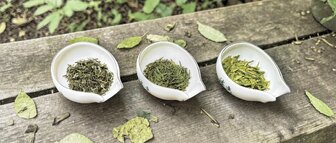
In the world of tea, this period is especially significant. Just before Qing Ming, tea gardens produce their most prized harvest. Known as pre-Qing Ming or Mingqian teas (“picked before Qing Ming”), these teas are collected during a very short window when the first tender buds appear.
The result is a collection of exceptionally refined, limited teas highly valued by tea connoisseurs.
Why are they so special?
After winter, tea plants grow slowly. The leaves are small and tender, rich in nutrients and amino acids (especially L-theanine), which give the tea its natural sweetness and smooth umami character without bitterness.
Cool early spring conditions also mean fewer pests, so these teas are naturally clean, often grown without the need for pesticides.
Harvesting is done by hand and lasts only a few days. It can take tens of thousands of tiny buds to produce just one kilogram of finished tea.
Pre-Qing Ming teas are known for:
- a light yellow-green liquor
- a soft, naturally sweet taste with no harshness
- a fresh aroma reminiscent of spring meadows or newly cut grass
- notes of young peas or delicate flowers
For tea lovers, Qing Ming marks a benchmark of quality – and price – among the finest green teas in the world.
Qing Ming Teas in Our Selection
Each spring, we bring a small selection of these rare teas to our collection.
Meng Ding Gan Lu (蒙顶甘露) – Sweet Dew
“Sweet Dew” from Meng Ding Shan is one of the most celebrated Chinese green teas. It comes from Sichuan Province, often regarded as the cradle of tea cultivation.
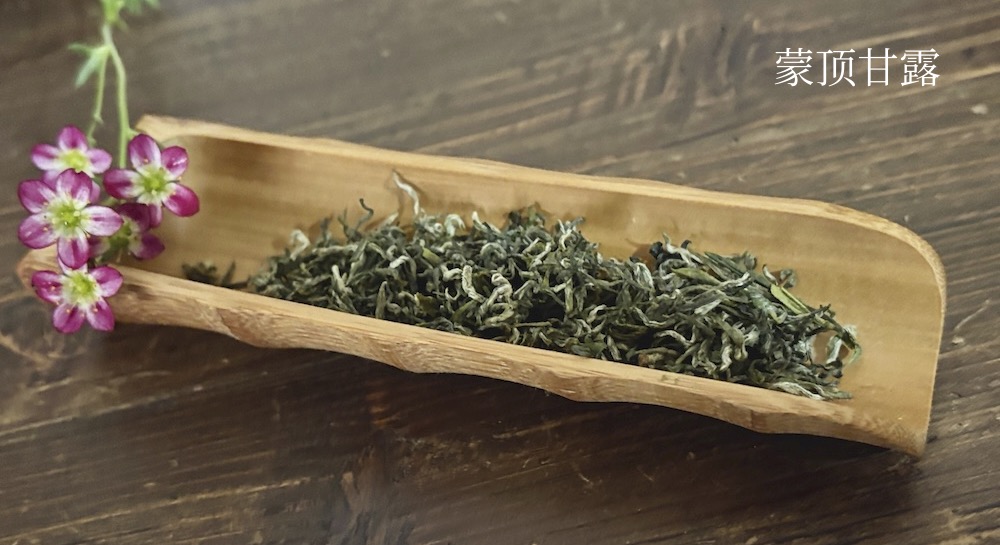
With a history spanning over a thousand years, dating back to the Tang dynasty, it is still processed by hand from the earliest spring shoots. The misty mountain climate slows growth, enhancing natural sweetness.
The leaves are small, delicately curled, and covered in fine down. The cup offers floral, meadow-like aromas and a creamy, sweet, refreshing taste with a long, clean finish.
Meng Ding Shi Hua (蒙顶石花) – Stone Flower
This exceptional early spring green tea dates back to the Tang dynasty and was once reserved as a tribute tea for the imperial court.
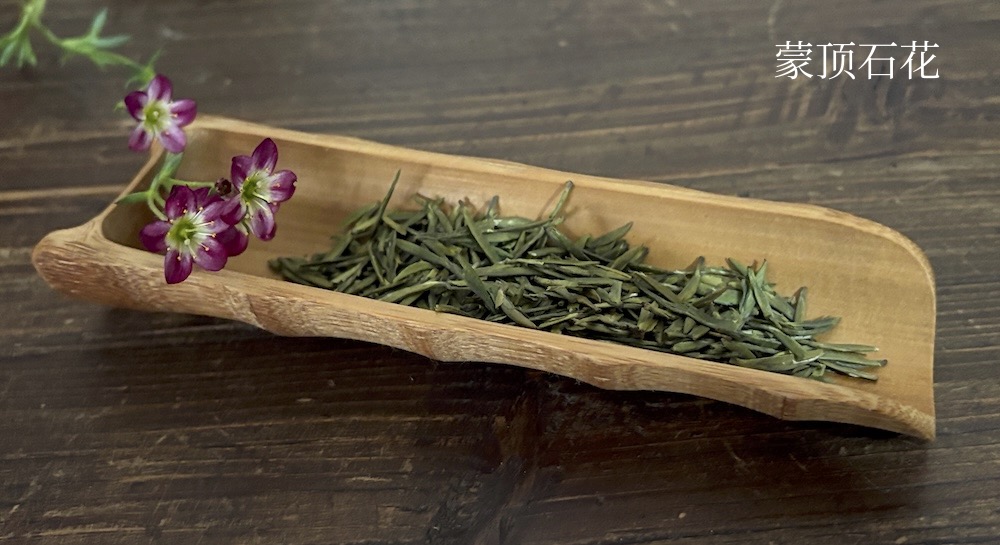
Grown in misty, humid conditions, the slow growth results in high levels of amino acids. Only unopened buds are carefully hand-picked.
The leaves are flat and resemble small petals. The liquor is fresh and bright, with mineral notes, hints of young peas, nuts, and a gently spiced finish.
Lung Ching Xin Chang Da Fo (大佛龙井) – Dragon Well of the Great Buddha
This variation of Lung Ching (Longjing) comes from the Xinchang region, where tea gardens surround the historic Da Fo temple at higher altitudes.
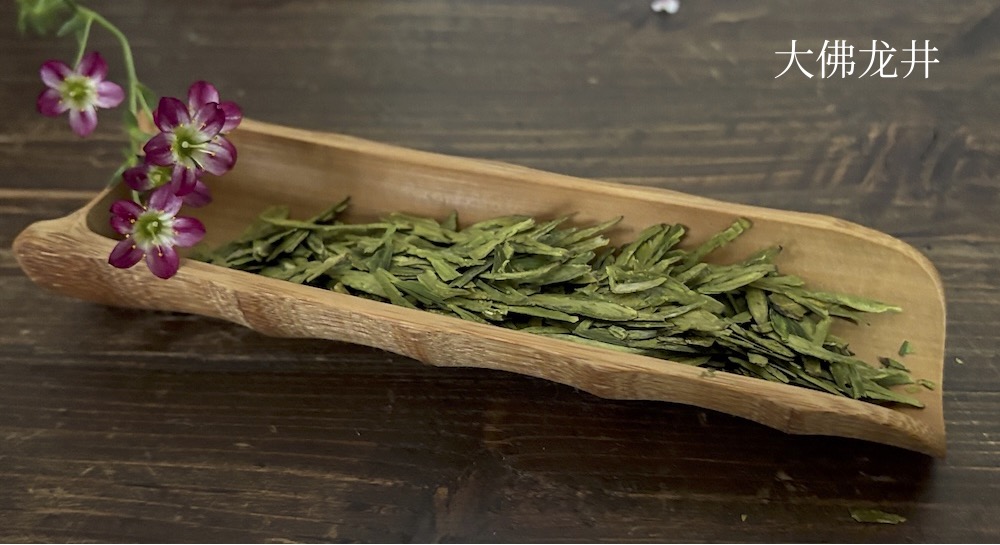
Mingqian harvest consists of one bud and one leaf. The leaves are flat, smooth, and blade-shaped.
The flavour is fresh and full, with notes of spring peas, sweetcorn, and a characteristic nutty undertone. The cooler climate enhances aromatic intensity, making this version particularly vibrant and expressive.